Client Background & Needs
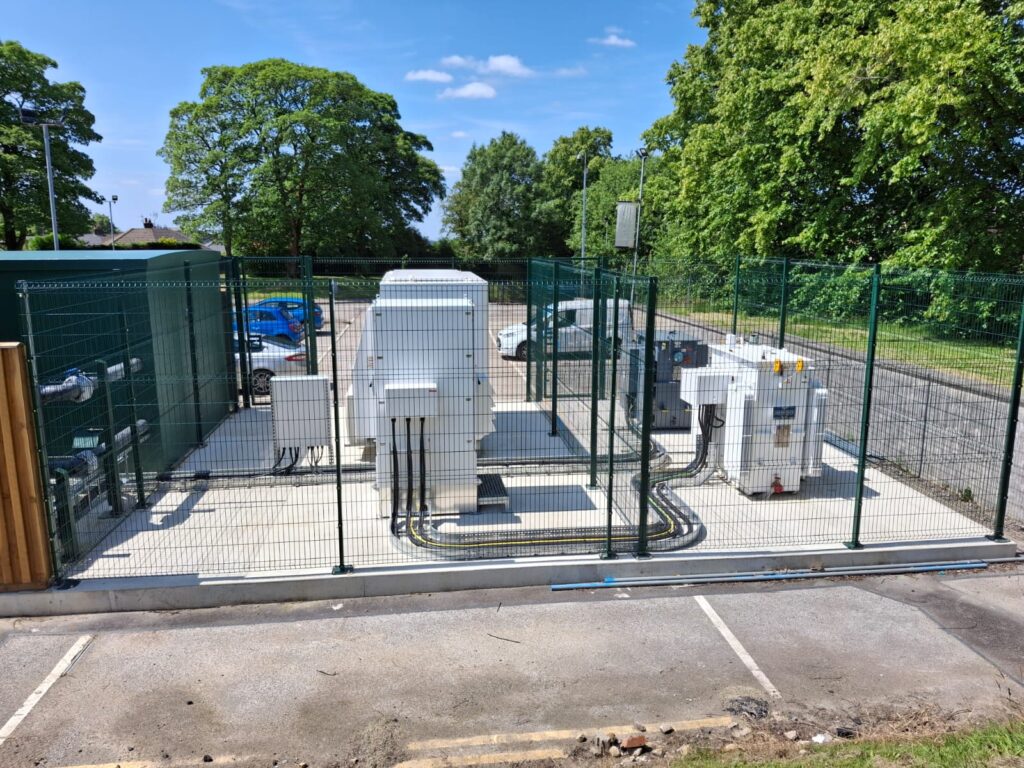
This Solar Farm is a renewable energy site designed to provide sustainable electricity to approximately 1,750 homes for an entire year. As part of the UK’s ongoing transition to greener energy sources, the solar farm plays a crucial role in reducing carbon emissions and supporting the National Grid.
Given the site’s high energy capacity and its integration into the 11kV distribution network, the client required a tailored earthing design, robust testing protocols, and expert oversight during commissioning to ensure compliance with industry safety standards.
Pendulum Power Earthing was chosen for this project due to our extensive experience in renewable energy infrastructure, earthing system design, and commissioning expertise.
Challenges & Approach
The Solar Farm presented several technical and logistical challenges:
Variable Ground Conditions: The site’s diverse soil composition required careful assessment to develop an earthing design that maintained low resistance pathways across the entire site.
Compliance with Stringent Standards: Ensuring alignment with BS EN 50522 and ENA TS 41-24 was crucial to prevent hazards such as touch and step voltage risks.
Commissioning Complexity: Overseeing the commissioning process required expert supervision to ensure all tests, connections, and safety measures were correctly implemented.
To address these challenges, we designed a custom earthing solution that maximised electrical conductivity while minimising installation complexity. Our approach involved strategic electrode placement, comprehensive material selection, and precise testing protocols to verify system performance.
Implementation & Solution
Pendulum Power Earthing delivered a comprehensive solution in three key stages:
Earthing Design Development:
Designed a robust earthing network tailored to the site’s soil conditions and electrical load requirements.
Optimised electrode placement to ensure low resistance values and effective fault current dissipation.
Fall of Potential (FOP) Testing and Full Commissioning:
Conducted extensive FOP testing to verify the installed earthing system’s effectiveness.
Utilised precision testing equipment to assess voltage gradients, ensuring step and touch voltages were within safe limits.
Carried out full commissioning services to confirm the solar farm’s electrical infrastructure was operational, compliant, and secure.
Senior Authorised Person (SAP) Duties:
Provided SAP oversight throughout the commissioning process.
Ensured all commissioning activities met functional and safety requirements.
Authorised and approved switching procedures, confirming the system’s readiness for energisation.
Results & Impact
The project was successfully delivered with outstanding results:
Compliant Earthing System: The final installation met BS EN 50522 and ENA TS 41-24 standards, ensuring safe operational conditions.
Enhanced Site Safety: Step and touch voltage risks were fully mitigated, safeguarding personnel and infrastructure.
Efficient Commissioning Process: Our SAP services ensured a smooth and organised commissioning phase, minimising delays.
Operational Readiness: The Solar Farm was energised on schedule, contributing to the UK’s renewable energy targets by powering 1,750 homes annually.
Conclusion & Key Takeaways
This Solar Farm case study demonstrates Pendulum Power Earthing’s expertise in delivering customised earthing designs, comprehensive testing services, and expert commissioning oversight. Our ability to manage complex renewable energy infrastructure ensures safe, efficient, and compliant installations.
For developers seeking trusted expertise in solar farm earthing design and commissioning, Pendulum Power Earthing offers proven solutions that combine technical precision with regulatory compliance.